
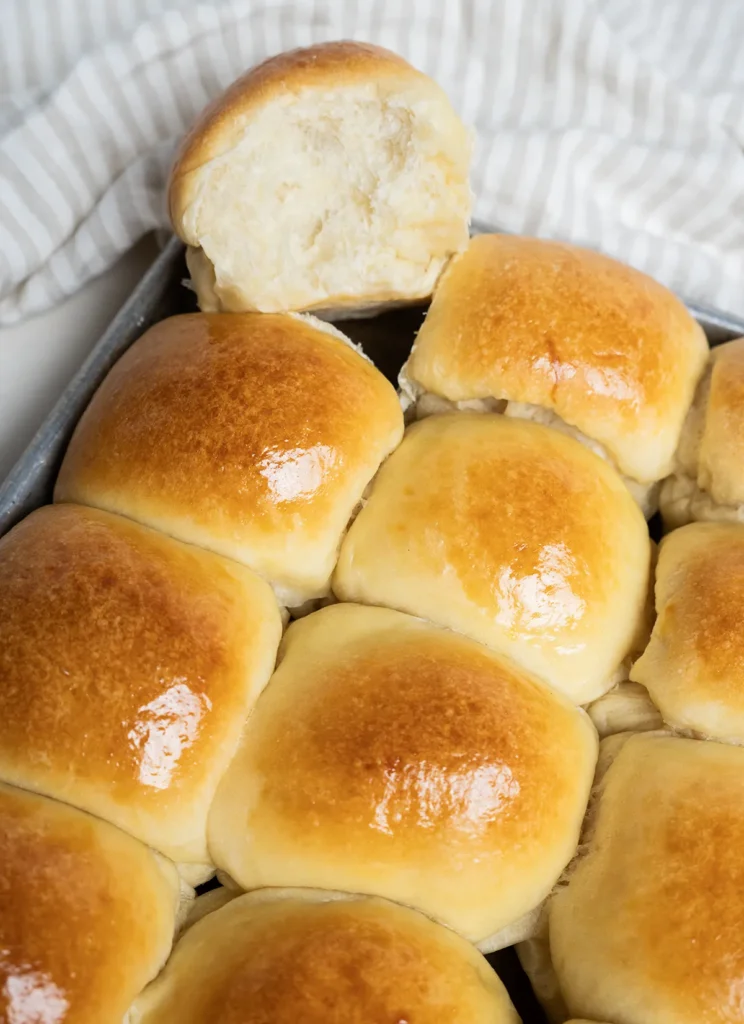
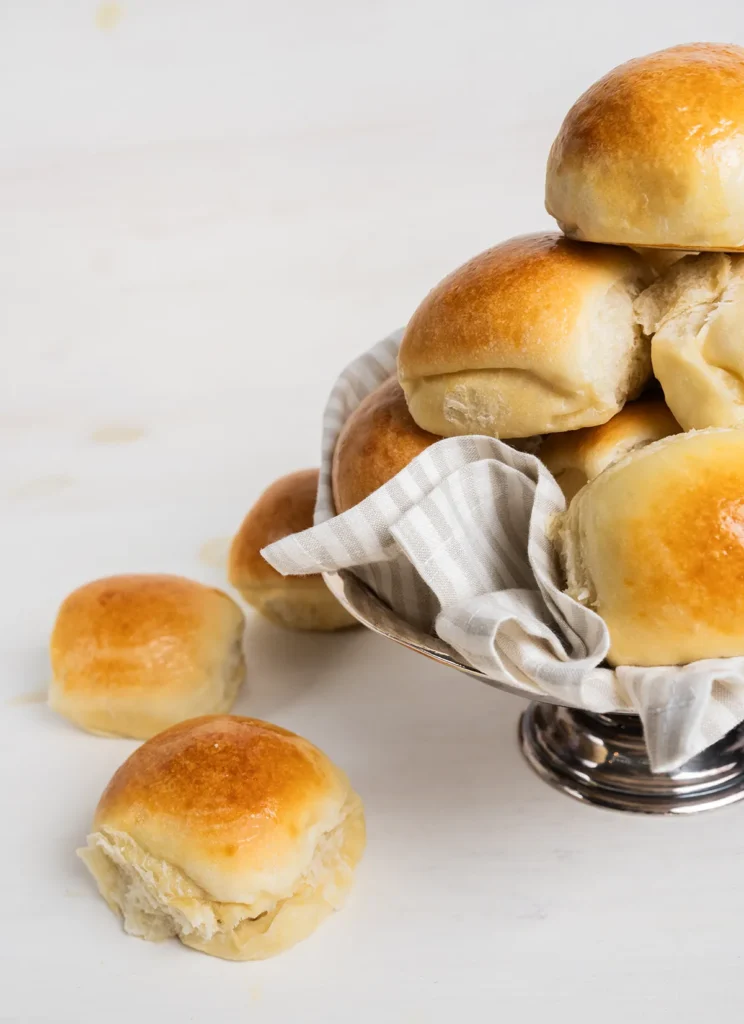
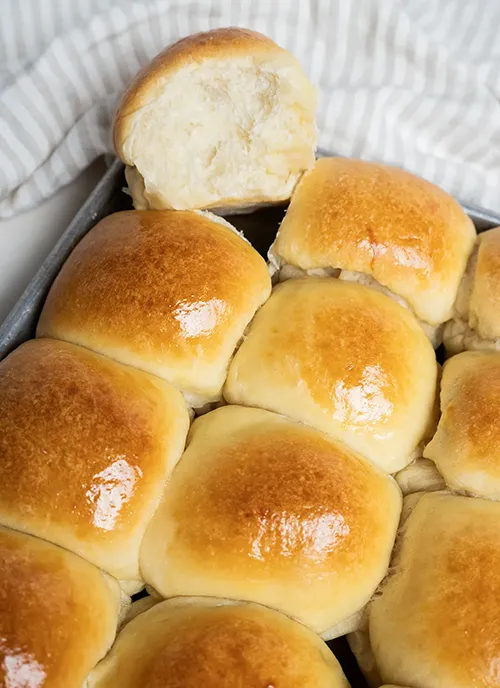
These sourdough Hawaiian rolls come out so soft, fluffy, a little tangy, and just sweet enough. They’re the kind of rolls people will spoil their appetite for dinner with, because they’ll be gone before dinner even hits the table (and they make amazing slider or burger buns, too).
Some links in this post may be affiliate links. Read my disclosure policy.
Prefer to Watch Instead of Read?
What are Hawaiian Rolls?
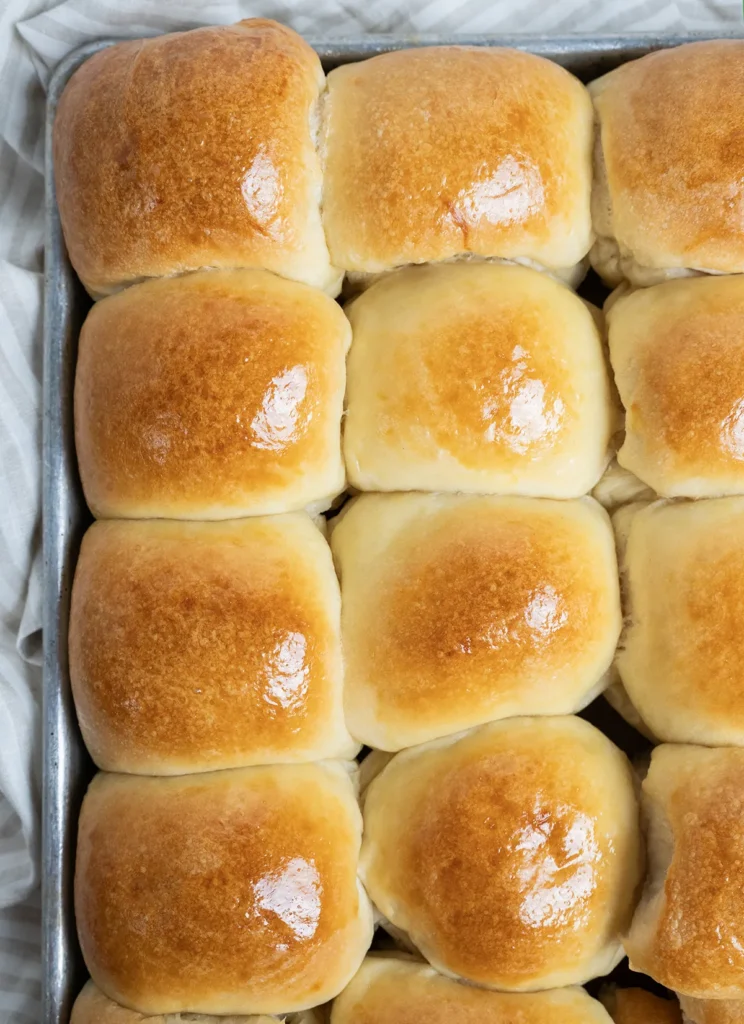
Hawaiian rolls are soft, fluffy, slightly sweet dinner rolls made with brown sugar, eggs, and pineapple juice for the slightly sweet and tropical flavour they’re known for. They’re richer than standard dinner rolls but lighter than brioche, with a soft and fluffy texture that makes them perfect for dinner rolls or sandwiches. This type of bun was made popular by King’s Hawaiian, a company founded in the 1950s by Robert Taira who first sold his sweet rolls out of a bakery in Hilo before the brand exploded across the U.S. This sourdough rendition keeps the same vibe. It’s just as soft, sweet, and golden as the original,but with deeper and more complex flavour thanks to the slow sourdough fermentation.
Ingredients
- Sourdough starter leavens the bread, adds a subtle tang to balance the flavour, and makes the crumb tender and fluffy. Don’t have any yet? Learn how to make your own sourdough starter from scratch here!
- All-purpose flour has a medium gluten content, perfect for making rolls that are soft, light, and fluffy. Use unbleached flour if you can, for the best results with sourdough starter.
- Pineapple juice gives the buns a slightly sweet and tropical flavour, and helps make them soft and fluffy. You can use the juice from a small can of pineapple chunks or tidbits, you won’t need a lot.
- Milk adds some richness and softness to the buns. I recommend using whole milk.
- Brown sugar adds sweetness, and also help make the buns soft. You can use either dark or light brown sugar.
- An egg and a yolk add richness and softness. Use large eggs.
- Salt enhances the other flavours and helps tighten the gluten structure. I like using fine sea salt.
- Unsalted butter adds softness and richness. You can use salted butter instead, but in that case you may want to reduce the salt in the recipe.
How to Make Sourdough Hawaiian Rolls Step-by-Step
1. Make the Levain
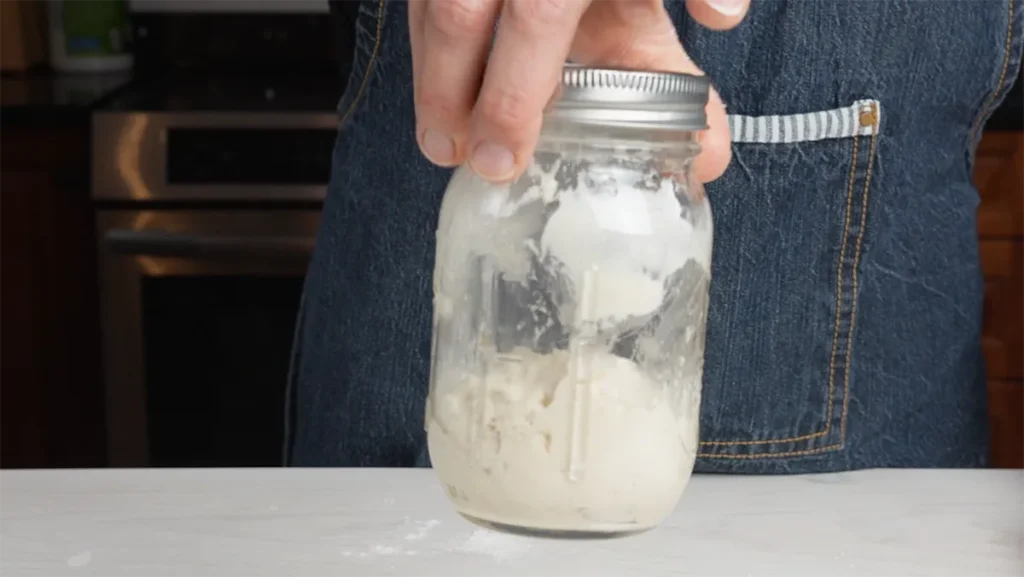
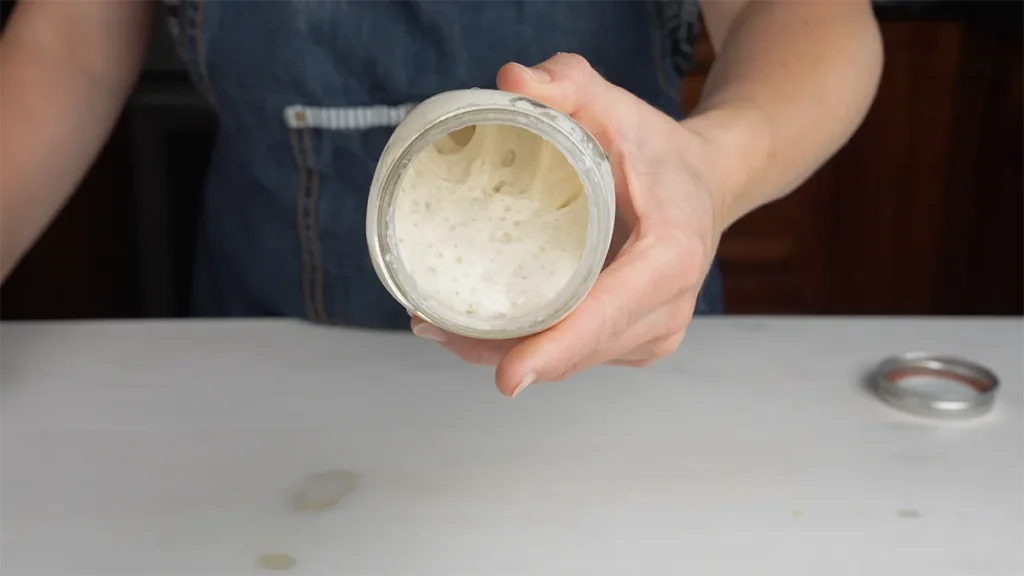
The night before you want to bake the rolls, mix together the all-purpose flour, pineapple juice, and active sourdough starter. Transfer it to a jar or container that is at least three times as large as the mixture to give it room to expand, and cover it loosely.
2. Mix the dough
The next day, after the levain is nice and bubbly and has at least doubled in size you can start making the dough. In the bowl of a stand mixer fitted with a dough hook, mix together all of the levain, all-purpose flour, milk, pineapple juice, egg, yolk, and salt on low speed until combined and no dry bits of flour remain.
3. Knead and Add Butter
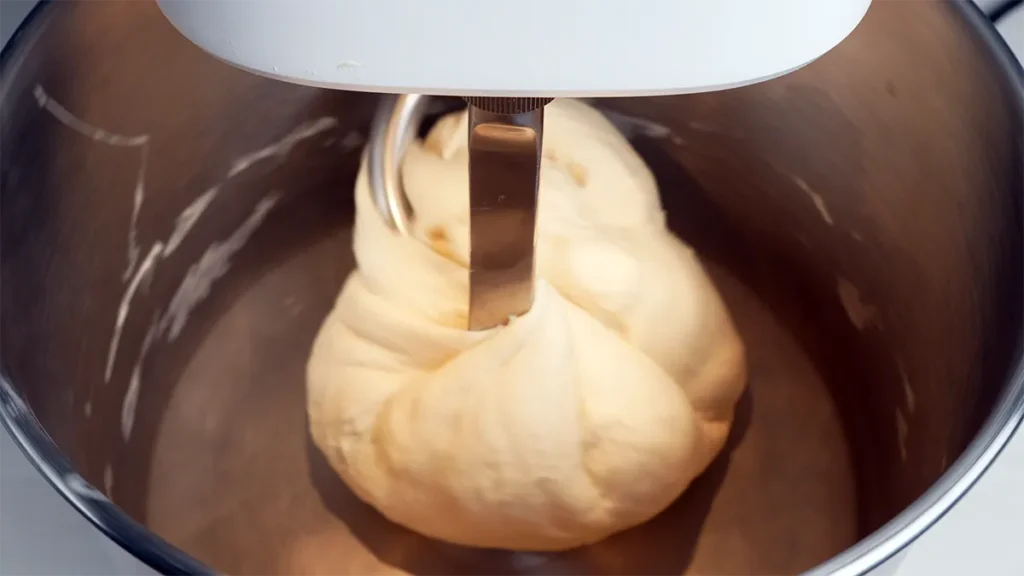
Increase the mixer speed to medium or medium-low, and knead for a few minutes until the dough is coming together and clearing the sides of the bowl. Start adding the room temperature butter one piece at a time. Wait until each piece of butter has incorporated before adding the next. After all the butter has been added, knead for another 6–8 minutes or until the dough is strong and silky smooth.
4. Bulk Ferment
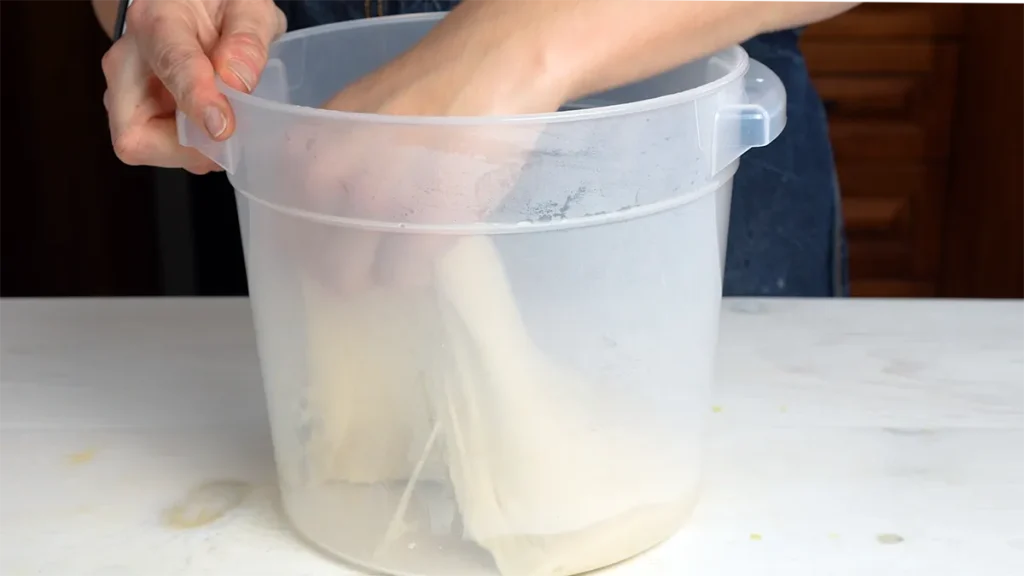
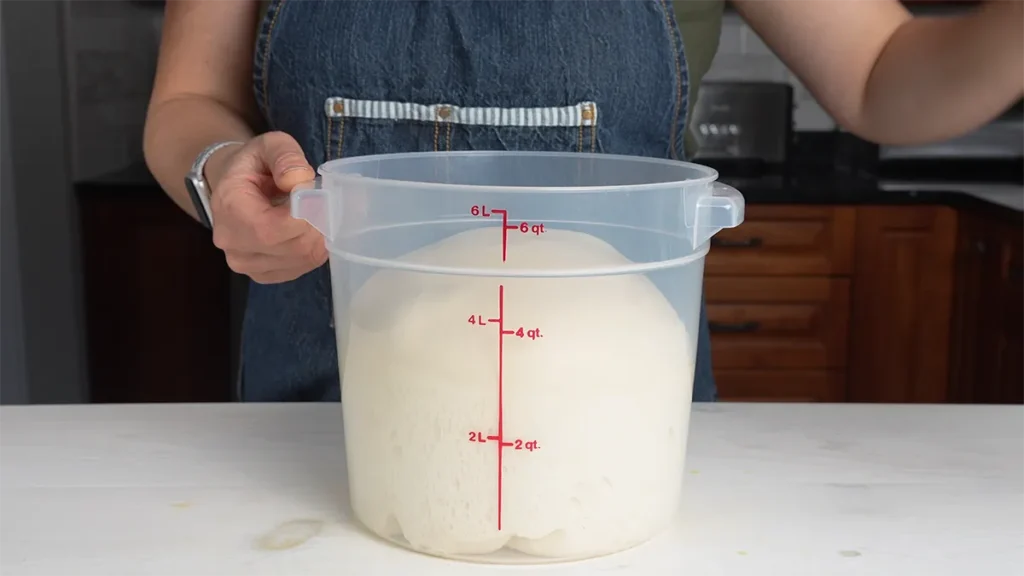
Roughly form the dough into a ball and transfer it to a large bowl or a container to proof in. I love using these 6-quart Cambro containers for proofing because their straight transparent sides make it really easy to tell how much your dough has risen. Cover and leave it to rest. Perform 3–4 sets of stretch and folds every 30–45 minutes: reach under the dough with your hand, pull it up and over itself, turn the container 90 degrees and repeat until you’ve worked all the way around the dough. Watch my video to see how it’s done.
5. Divide
Weigh the entire batch of dough, and divide it by how many rolls you want to make. This recipe makes 15 rolls that are about the size of a standard Hawaiian roll. You can divide it into more pieces for smaller rolls, or fewer pieces for larger rolls or burger buns. Use a scale to divide the dough into equal-size portions. They don’t need to be exactly the same to the gram, the point is to make each roll within a few grams of the same weight so they all finish baking at the same time.

6. Shape
Shape each portion of dough into a smooth ball. Fold the edges into the center, then flip it over so the smooth side is on top. Curl your hands over the top, and with your fingers catching the bottom of the ball roll it against your counter to smooth out the top. Pinch dough closed around the bottom Watch my video to see how it’s done.
7. Proof
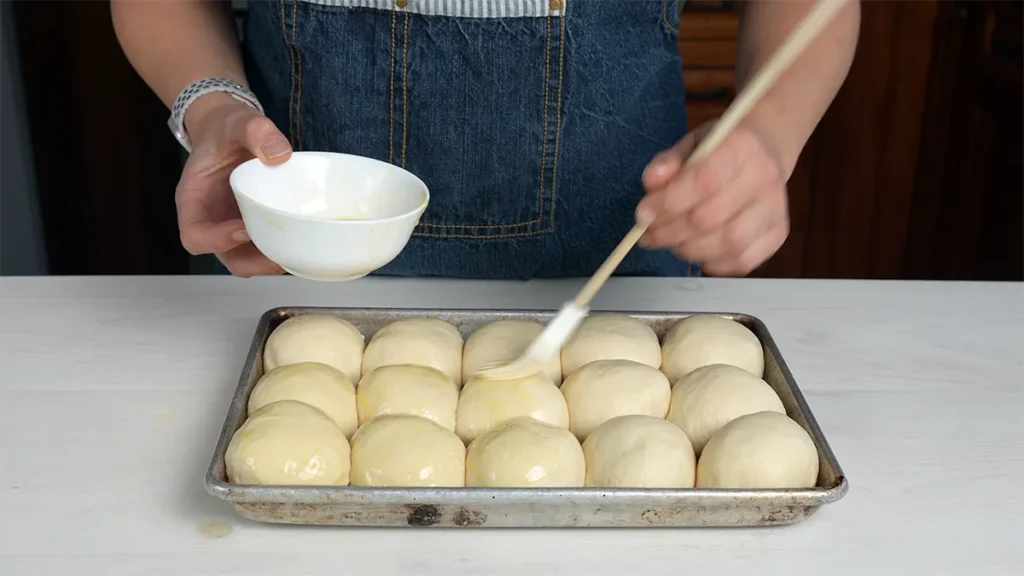
Arrange the rolls in rows on a lined baking sheet. Cover with a damp kitchen towel, plastic wrap, or a reusable plastic baking sheet cover. Leave at warm room temperature until they’re puffy but not quite doubled in size, 1-3 hours.

8. Bake
Towards the end of proofing, preheat your oven to 350˚F (175˚C). Right before popping them in the oven brush the tops of the rolls with a beaten egg. Bake until puffed and golden brown. For my batch of 15 rolls, it took me 40 minutes in my oven. Smaller rolls will bake faster and larger rolls will need longer, and remember that every oven is different! I recommend checking regularly after 20 minutes or so. If you have a probe thermometer, you can check the temperature of the middle of a roll—if it has reached at least 200˚F (93˚C) it’s done! Let the rolls cool for 20–30 minutes on the tray before serving.

Make-Ahead, Storage & Freezing
You can freeze baked rolls, and defrost them in the refrigerator overnight before serving. They’ll be almost as good as fresh-baked! Make sure the rolls have cooled completely to room temperature before storing them in an airtight freezer bag. If they’re still warm you risk trapping steam inside the bag and the rolls could get soggy. I recommend freezing baked rolls instead of the dough, which can be tricky to defrost and proof properly after it’s been frozen.
Serving Ideas
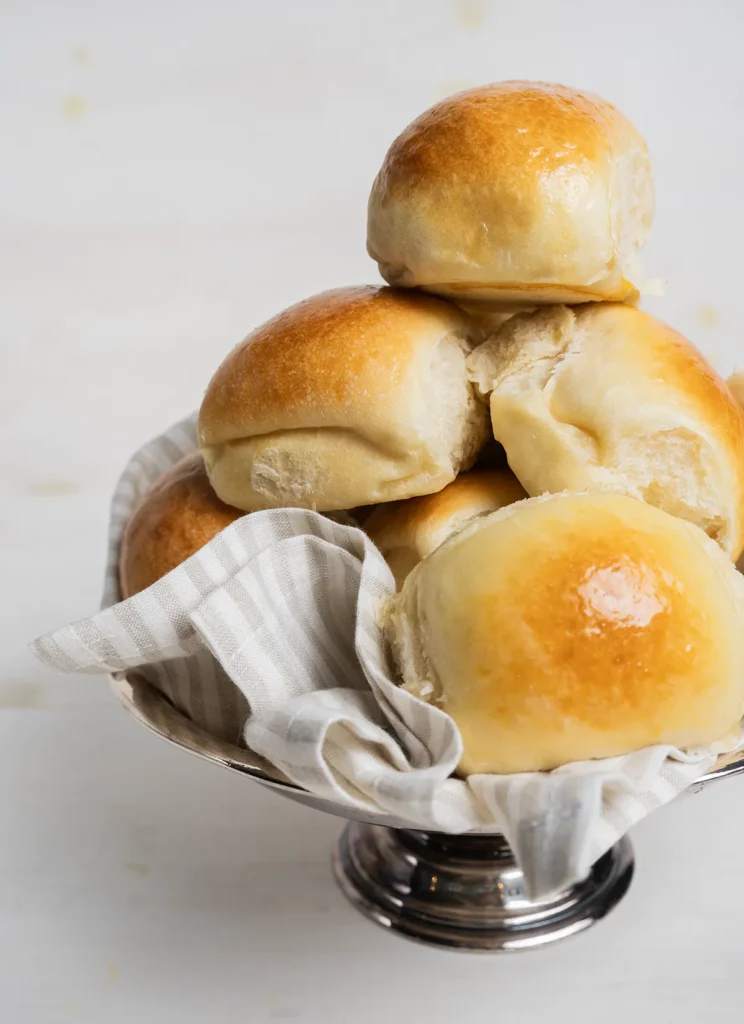
- These make amazing dinner rolls for Thanksgiving, Christmas, or a summer barbecue! Make them nice and small to serve a large crowd, or make more generously-sized rolls.
- No reason to limit yourself to standard round rolls! This dough is so easy to work with, so have fun making all kinds of roll shapes from knots, to braids, to cloverleaves.
- Divide the batch into 8 portions to make burger or sandwich buns. You could top them with poppy seeds or sesame seeds after egg washing.
- Use them to make sliders or breakfast sandwiches. They’re amazing with ham or bacon!
- If you have any leftover rolls that have gone a little stale, they make amazing French toast! Just cut them into slices and use them in your favourite French toast recipe.

Troubleshooting
My dough isn’t rising
- Your sourdough starter might not be strong enough to leaven bread yet. Check out my post on troubleshooting common sourdough starter issues, and how to feed and maintain your starter to make it nice and strong.
- Your room temperature is cool. This on its own shouldn’t stop fermentation, but it will slow it down. Leave the dough to ferment for longer, and it should eventually get there. If you want it to go faster, you can try one of these tricks for warming sourdough starter, most of which can be used for warming up a batch of dough.
My rolls are dense
- The dough wasn’t fermented for long enough. If you’re baking the same day, the dough should rise to about double in size before dividing and shaping. After shaping, make the rolls should look light and puffy (though not quite doubled in size) before baking.
- This could alsobe due to one of the issues under “My dough isn’t rising”
My rolls collapsed
- The rolls likely over-fermented to the point where the gluten has weakened and is no longer able to hold onto the fermentation gases and support the dough. Next time, keep a closer eye on fermentation to make sure it doesn’t go too far.

FAQs
If the discard isn’t very old, the yeasts in the discard should still make the dough rise and ferment but expect it to take longer than usual. If it’s been longer than a week or two since the discard was last fed, it may impart too much of a sour flavour to the buns, or even an acetone flavour, which you may not like in the final product. I recommend using active, bubbly starter as close to peak as possible.
Yes! Swap out the milk for a high-fat dairy-free milk such as coconut or oat milk. Use a good quality vegan butter (look for the kind that comes in sticks) to swap out for the butter in the recipe.
A levain is kind of like an offshoot of your main starter, made to be used up entirely for one recipe. Making a levain is handy when you want your starter to adapt to different flour(s) or a different liquid, without affecting your main starter or having to feed and maintain two separate starters.
Absolutely. This dough is enriched and quite soft, so expect it to feel quite sticky at first. Start by mixing everything together with a spatula until no dry flour remains, then let the dough rest for 20–30 minutes. This rest gives the flour time to hydrate and starts developing gluten. After that “slap-and-fold” the dough for about 10–12 minutes, or until it becomes smooth and elastic. If it’s sticking to the counter, resist the urge to add extra flour. Just use a bench scraper to loosen it from the counter and keep going. Once it starts to hold together and gets less sticky, start adding the butter one piece at a time. Smear, press, and fold the butter into the dough, adding the next piece of butter after the last one has been incorporated. Continue kneading or slapping and folding until the dough is silky smooth.
Did You Make This Recipe?
If you baked a batch of these, tell me how it went! Leave a star rating and a comment below. Your feedback helps others, and it really makes my day!
Sourdough Hawaiian Rolls
Ingredients
Method
- The night before you want to bake, bix together 35 g active sourdough starter, 70 g all-purpose flour, and 70 g pineapple juice until combined. Transfer to a jar or container that's large enough for it to triple in size. It doesn't always triple (just doubling is fine!) but play it safe and choose a jar or container with plenty of room for expansion.
- Leave the levain at room temperature until at least doubled, about 8-12 hours.
- Once your levain is nice and bubbly and at least doubled in size, you can make your dough. To a stand mixer bowl or a large mixing bowl, add 175 g levain (all of the levain you made), 525 g all-purpose flour, 105 g whole milk, 105 g pineapple juice, 35 g brown sugar, 1 whole egg, 1 egg yolk, and 10 g fine sea salt. Mix until no dry bits of flour remain.
- If using a stand mixer (recommended): With the dough hook attached, knead on medium-low speed until the dough is holding together well and coming away from the sides of the bowl. Begin adding 65 g unsalted butter one piece at a time, waiting until each piece is incorporated until adding the next. Knead for 6-8 minutes longer until the dough is nice and smooth.
- If mixing by hand: Mix in the bowl until the dough starts coming together. Transfer to a clean countertop and begin kneading. Once the dough is starting to smooth out, begin adding 65 g unsalted butter one piece at a time, smearing it into the dough and kneading. Wait until each piece is incorporated before adding the next. Continue kneading until the dough is nice and smooth.
- Form the dough roughly into a ball and transfer to a lightly greased or buttered bowl or container to bulk ferment at room temperature for 6–8 hours, or until just about doubled in size.
- Weigh the entire piece of dough, and divide that weight by the number of rolls you want to make. Dividing by 15 will give you generously-sized dinner rolls or slider buns.
- Divide the dough into equal-sized portions using a scale. It's OK if the portions are within a few grams of each other, it doesn't have to be perfect. The idea is that they're close to the same weight so they finish baking at the same time.
- Form each portion into a smooth ball. Fold the sides of the dough into the middle, then flip it over so the smooth side is up, and cup your hand around the top. Roll until the top is smooth, and pinch the bottom of the dough closed. Arrange the rolls on a lined baking sheet and cover with a damp kitchen towel or plastic wrap.
- Leave at warm room temperature until nice and puffy, not quite double in size. Towards the end of proofing, preheat the oven to 350˚F (175˚C). Brush the tops of the rolls with 1 egg (beaten).
- Bake until puffy and golden brown. If you have a probe thermometer, the interior of the buns should register at least 200˚F (93˚F). Leave them to cool on the baking sheet.
Leave a Reply