
While sourdough starter is surprisingly resilient, there are some problems you might come across. If you’ve ever wondered why your starter isn’t rising, or why it smells a certain way, look no further. No matter what sourdough starter problem you come up against, you’ll know how to handle it like a pro!
Some links in this post may be affiliate links. Read my disclosure policy.
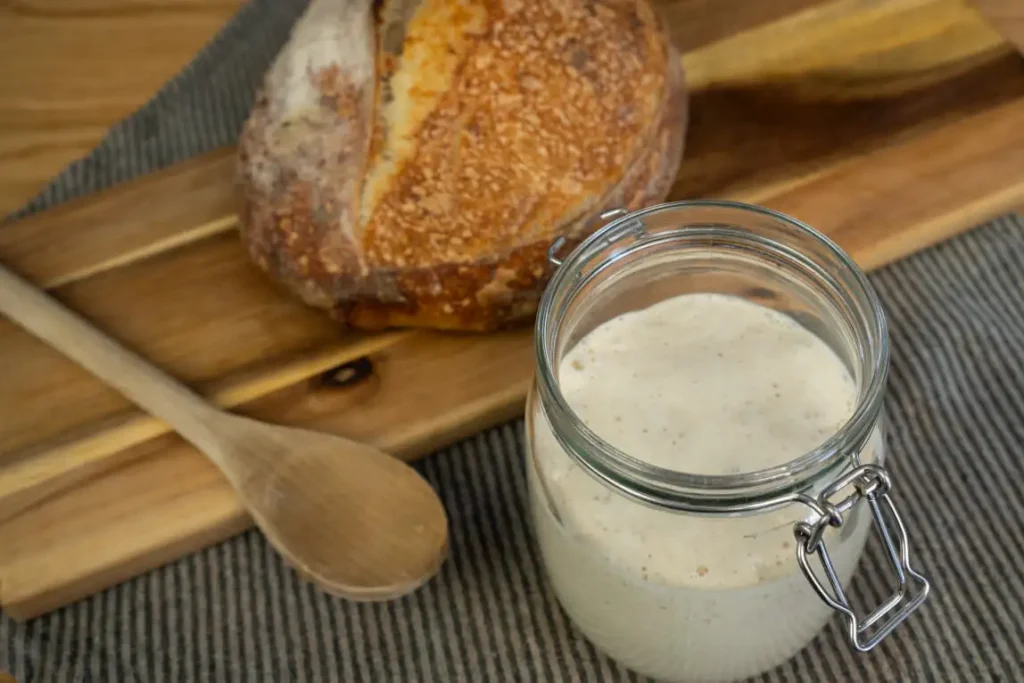
Why isn’t my sourdough starter rising?
This is probably the most common question or worry that sourdough bakers have! There are lots of possible reasons for a starter to be sluggish or not rising:
Your starter is still immature
If your sourdough starter is less than 3 weeks old, this is the most likely reason. Luckily it’s nothing to worry about!
How to fix it Follow my guide for how to make a starter, starting at Phase 2.
Your starter was recently fed
Did you feed your starter within the last few hours? Or did you feed it at a high ratio and it’s been less than 6-12 hours? If so, this is the most likely reason it’s not rising.
How to fix it Just wait a little longer, and you should see it rising. If not, see if one of the other reasons on this list sound like it could be the cause.
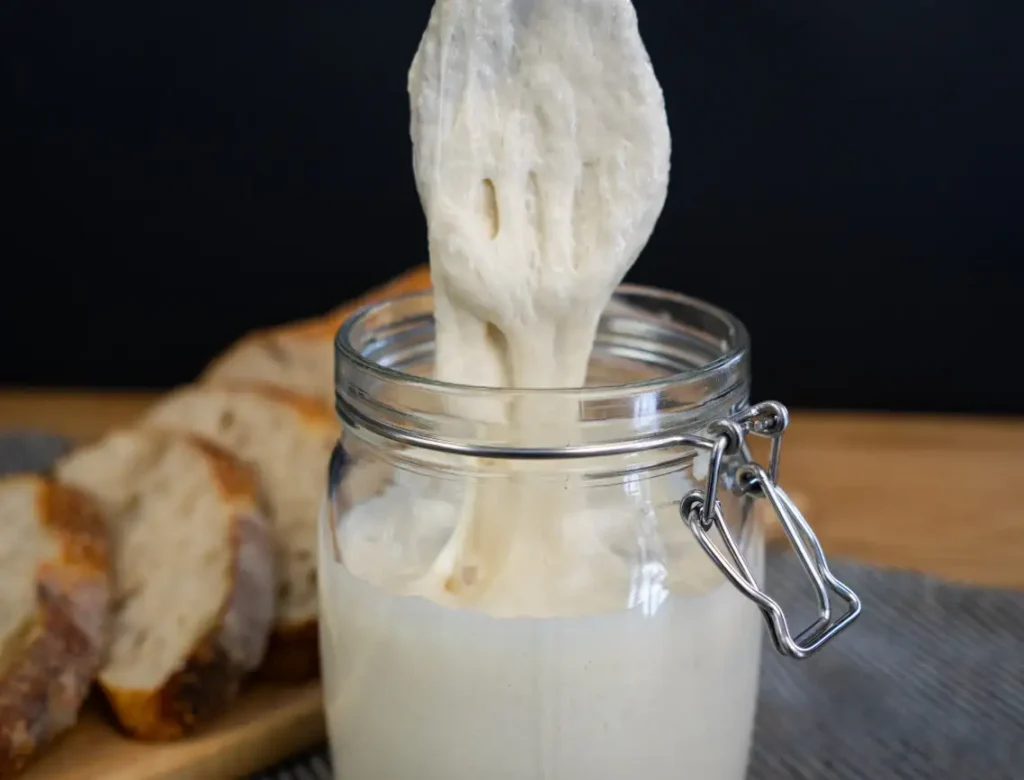
It’s too cold
Yeasts do best at warmer temperatures, ideally between 70–85°F (21–30°C). That said, starters will generally adapt to cooler room temperatures. Most of the time you won’t need to pamper your starter to keep it warm. It will rise more slowly than it will in a warm house, but it will eventually. If your house is really on the cool side and your starter is sluggish, this could be the reason.
How to fix it: Read this post for several ways to keep your starter warm.
You’re not feeding your starter enough
Some sourdough starter tutorials will have you discard half of the starter at each feeding. If you keep the amount of flour and water you feed each time, you will be underfeeding your starter. You need to feed at least as much flour and water (by weight) as the starter left in the jar or you’re not feeding it enough. This is how discarding by half leads to underfeeding:
Let’s say you start with 100 grams of starter. You discard half (leaving 50 grams) and feed it 50 grams of flour and 50 grams of water. This leaves you with 150 grams of starter. At the next feeding you discard half, leaving 75 grams of starter. Feeding it only 50 grams each of flour and water is not enough. And if you continue on like this, by about the eighth feeding you’ll be giving your starter only half the food it needs.
How to fix it: Discard at least two-thirds of your starter. Make sure you’re feeding at least as much flour and water by weight as the starter left in the jar. Read this post for more about how to properly feed and maintain a sourdough starter.
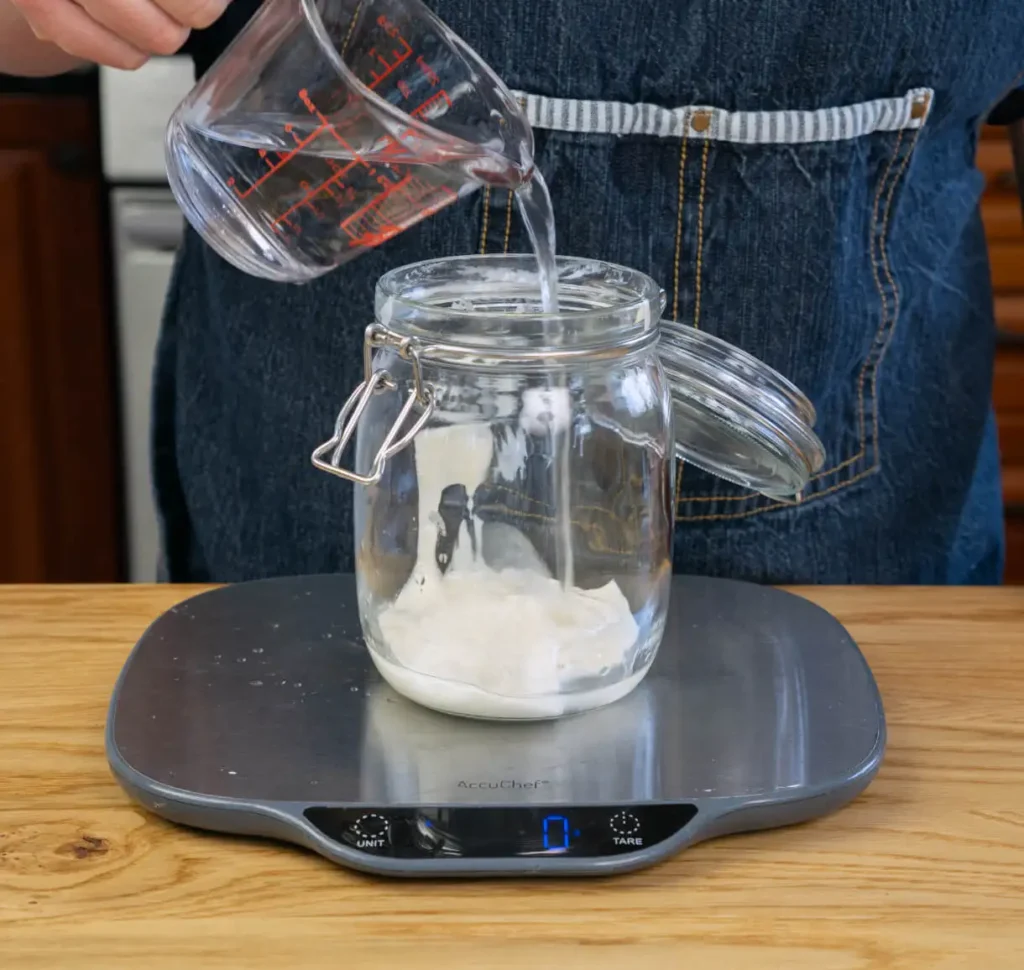
You used chlorinated tap water to feed your starter
In general, any water that’s good enough to drink is fine to use for starter. While making a starter from scratch that I recommend dechlorinating your tap water to avoid hindering your brand-new starter. If your starter is established and your tap water is safe to drink with, it’s unlikely that your tap water is the issue. However, if none of the other reasons on the list make sense to you as a possible cause, try the fix below.
How to fix it: Use filtered or dechlorinated tap water for the next few feedings. To dechlorinate your tap water, leave it uncovered at room temperature for at least 24 hours. Or you can boil it uncovered for 15-20 minutes and let it cool back down to room temperature before using.
Your stater was neglected
A starter that hasn’t been fed for a long time will be weaker than one that’s fed regularly. If this is the first feeding you’re doing after neglecting your starter, it’s likely that it just needs another feeding or two before bouncing back.
How to fix it: Wait and let it rise as much as it can (it might not double). Then discard and feed your starter again. Repeat this once or twice more and it should be back to normal again. If not, try using rye or whole wheat flour for one or two feedings. If that doesn’t do the trick, one of the other reasons on this list could be the cause.
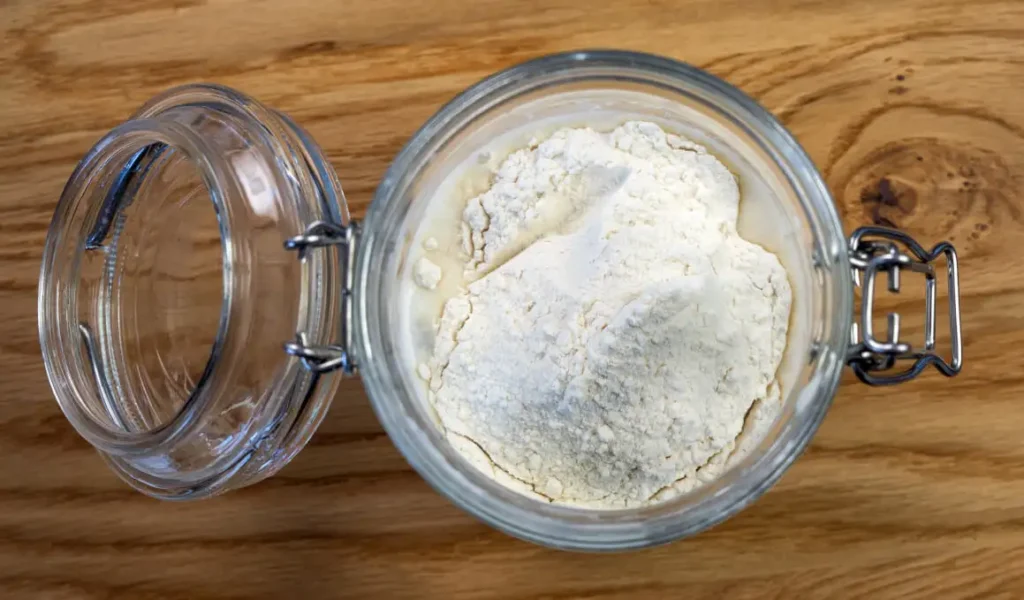
You’re using bleached flour to feed your starter
Many bakers use bleached flour without any negative effect. It’s not a given if you’re using bleached flour that your starter won’t do well. In fact, I did an experiment where I feed 4 starters with different flours and the bleched flour starter did just fine. It even rose higher than any of the others! However, if none of the other reasons listed here make sense in your situation, it could be the bleached flour. It wouldn’t hurt to try another flour to see if it helps, at any rate!
How to fix it: Switch to an unbleached flour for the next few feedings.
My starter isn’t passing the float test, can I bake with it?
This is one of those persistent sourdough myths floating around on the internet. The only thing the float test proves is whether your starter has trapped enough air to be less dense than water. Your starter could have a large thriving population of wild yeasts and bacteria that are ready to leaven a loaf of bread, but still fail the float test. That can happen if you just stirred the starter down (releasing much of its trapped gas) or you’re using a low-gluten flour such as rye to feed your starter (which isn’t very good at trapping gas to begin with).
How to fix it: There’s nothing to fix! Don’t waste your time with the float test. It’s not a reliable way to check if your starter is ready to bake with. If your starter reliably doubles or more within 6-12 hours after being fed, it’s most likely ready to bake with. If it’s not reliably doubling, read the rest of this post for possible reasons why.
Why is my starter rising and falling?
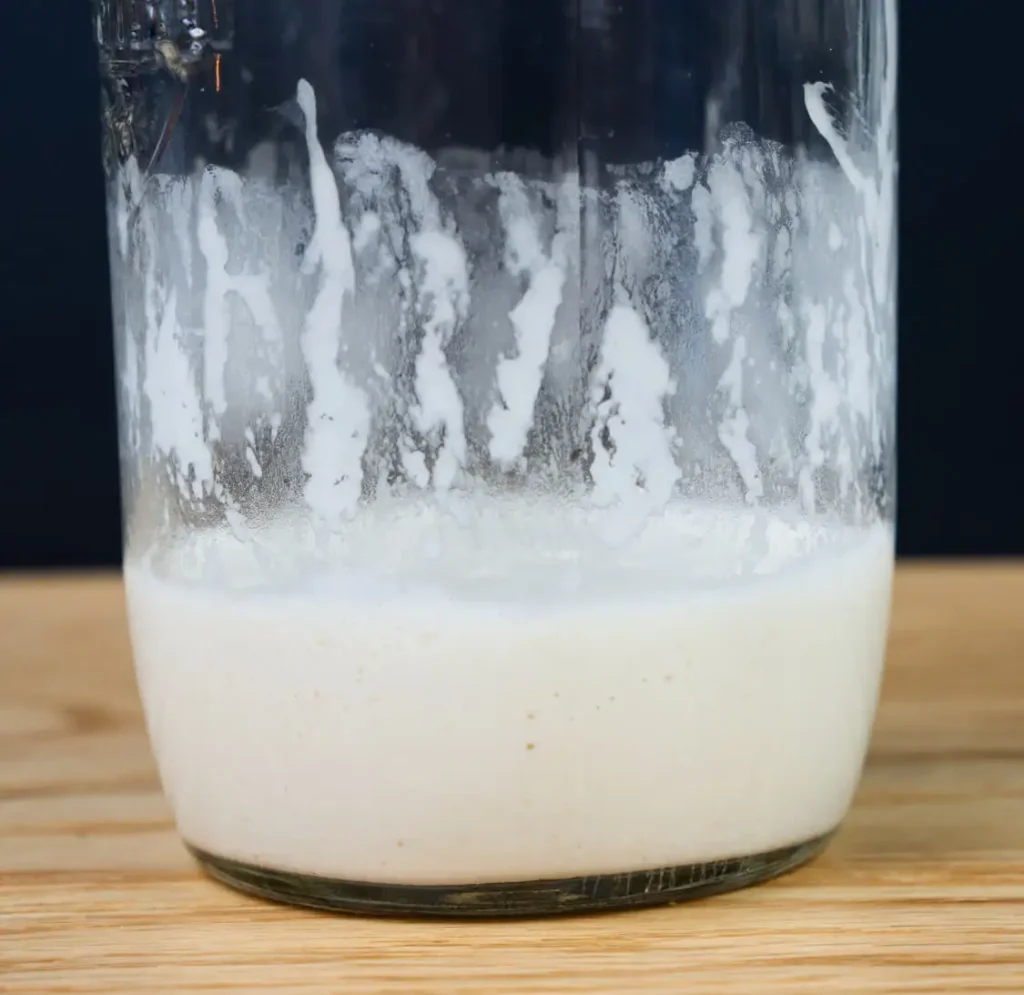
Starter gets more acidic the longer it’s been since it was fed. Eventually, the acidity breaks down the gluten in the flour and the starter is no longer able to trap the gases it produces. When this happens, the starter naturally falls.
How to fix it: No need to fix anything, this is how a normal starter behaves! But this is a good sign it’s time to feed your starter.
Why isn’t my starter very bubbly?
You may have seen photos online of starters with big bubbles, sometimes spilling over the jar. How bubbly a starter is depends a lot on what kind of flour it was fed with. A high-gluten flour such as bread flour is able to trap a lot more of the gases the sourdough culture produces. A lower-gluten flour such as rye will make your starter very active, but it can’t trap as much gas. Almost any flour can be used to feed a starter, even if it’s unable to trap large bubbles of gas. As long as your starter doubles or more within 6-12 hours of feeding, it should be strong enough to leaven a loaf of bread. That’s true even if it doesn’t have big bubbles!

How to fix it: If your starter is at least doubling within 6-12 hours after being fed, there’s nothing to fix. Is your starter over 3 weeks old and unable to leaven a loaf of bread? Read the rest of this post for some possible reasons why.
How can I tell if my starter has gone bad?
Starter is very robust and once it’s established, and is surprisingly difficult to kill by accident. However, it is possible for a starter to spoil though luckily that’s pretty rare. If you spot any of these signs in your sourdough it has gone bad and sadly must be thrown out. It’s not safe or advisable, and likely not possible, to save a spoiled starter. Just in case it’s always a good idea to make a backup of your starter.
- Pink or orange spots or streaks are caused by a bacteria called Serratia marcescens. It usually only occurs if the starter was very neglected for a significant amount of time.
- Fuzzy white or green spots or other signs of mold. Mold reaches far beyond what you can see with your eyes, especially with something liquid and porous like sourdough starter. So it’s not enough to simply scrape off the moldy part and feed what’s left. Sadly, you’ll have to toss it out. Starter can go moldy due to long neglect, or because the flour you’re using has mold in it. If you start over using the same flour and you find that the starter quickly goes moldy again, the flour is the likely culprit. Toss the flour out, and try again with a fresh bag.

I haven’t fed my starter for a long time, did I kill it?
An established starter is remarkably resilient and difficult to kill even with neglect. As long as it’s not showing any signs of spoilage, it’s almost certainly fine!
How to fix it: Transfer about 5-10 grams (a blob about the size of a grape) to a clean jar. Discard the rest. Feed it with 50 grams of flour and 50 grams of water. Allow it to double in size before discarding and feeding this way at least once more. This should get your starter bubbly and happy again. If it’s still sluggish, feed it with some whole wheat or rye flour to give it a boost.
I messed up the measurements while feeding, did I ruin my starter?
Don’t worry, using different amounts of flour and water to feed your starter won’t ruin it. I recommend weighing the water and flour so you get close to a 100% hydration starter. But it’s not that important for it to be perfectly accurate. A little more or less of the starter, flour, or water won’t make much difference.
How to fix it: It’s OK to eyeball adding some water or flour to adjust until the consistency looks right.

Why is my starter watery?
If the liquid in your starter is light-coloured and clear, it’s likely caused by adding too much water while feeding. This often happens when using cups to measure the flour and water. The common instruction to feed equal amounts of flour and water means by weight (grams) not by volume (cups). Flour is less dense than water. If you feed equal amounts using cups, you’re actually feeding about twice as much water as you should be. That’s far more water than flour can physically absorb. The more feedings you do this way, the more water there is relative to the flour. After a couple of feedings like this, you’ll have noticeable water separation.
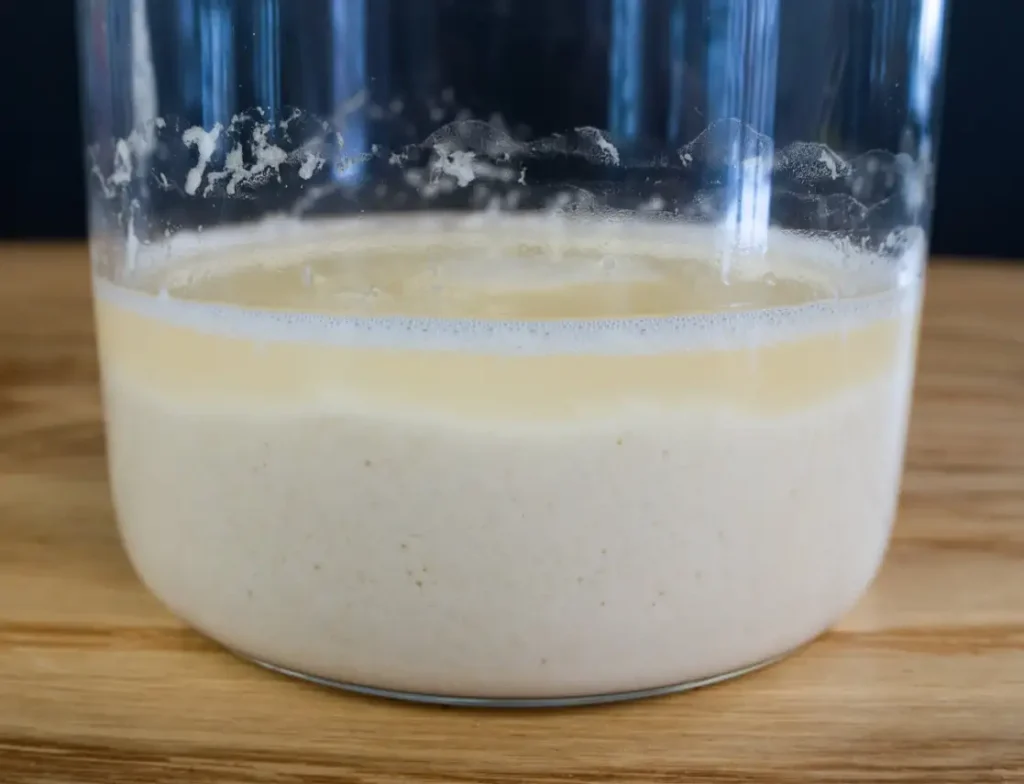
Excess water will eventually separate out from the sourdough starter mixture. It shows up as a clear or light beige layer somewhere in the middle or on top of the starter. If you ask on social media what it is, most comments will claim it’s hooch. This has nothing to do with hooch though, which appears when a starter hasn’t been fed for a while. There are a couple ways you can tell if it’s water separation or hooch. If your starter was fed within the last couple of days and the starter does not have a strong sour or alcoholic smell, it’s water separation. If it’s been a while since your starter was fed, and it has a strong alcoholic smell, it’s hooch.
How to fix it: Add flour to the jar a little at a time and stir it in until it has the consistency of a thick muffin batter. Next time you feed your starter, use half the amount of water as flour when using cups to measure. In other words, feed 1/2 cup of water for every 1 cup of flour. Or better yet, get a scale and start weighing your ingredients. On top of being more accurate, it’s faster and less messy!
Why does my starter smell like alcohol or acetone or nail polish remover?
A slight alcoholic smell can be normal, because alcohol is one of the natural products of fermentation and sourdough is a fermented food! If your starter has a very strong alcoholic scent, that is a sign that your starter is hungry. If your starter is smelling like nail polish remover, it is producing acetone as a sort of survival mechanism because it has completely exhausted its food source and needs to be fed.
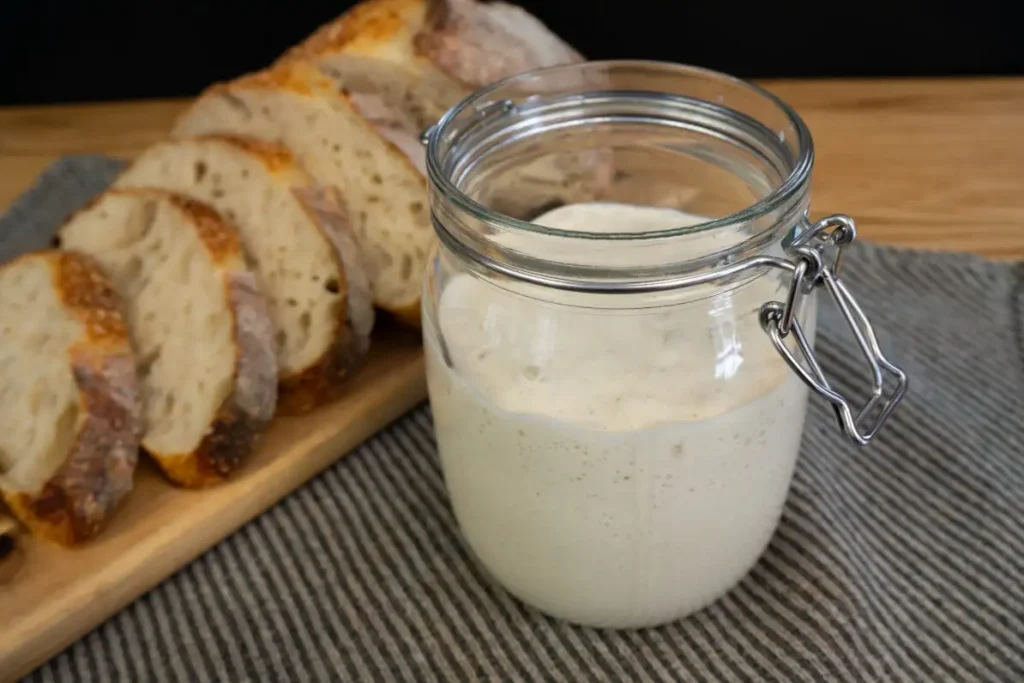
How to fix it: Move a little bit of the starter to a fresh jar—you’re aiming for about 5-10 grams (a grape-sized blob if you’re eyeballing it). Give it a feed of 50 grams of flour and 50 grams of water, and leave it at room temperature until it doubles in size. Discard and feed this way at least once more. With any luck your starter will be back to normal again, but if not you should try giving it some whole wheat or rye flour for a feeding or two.
Why does my starter have a layer of brownish or greyish liquid on top?
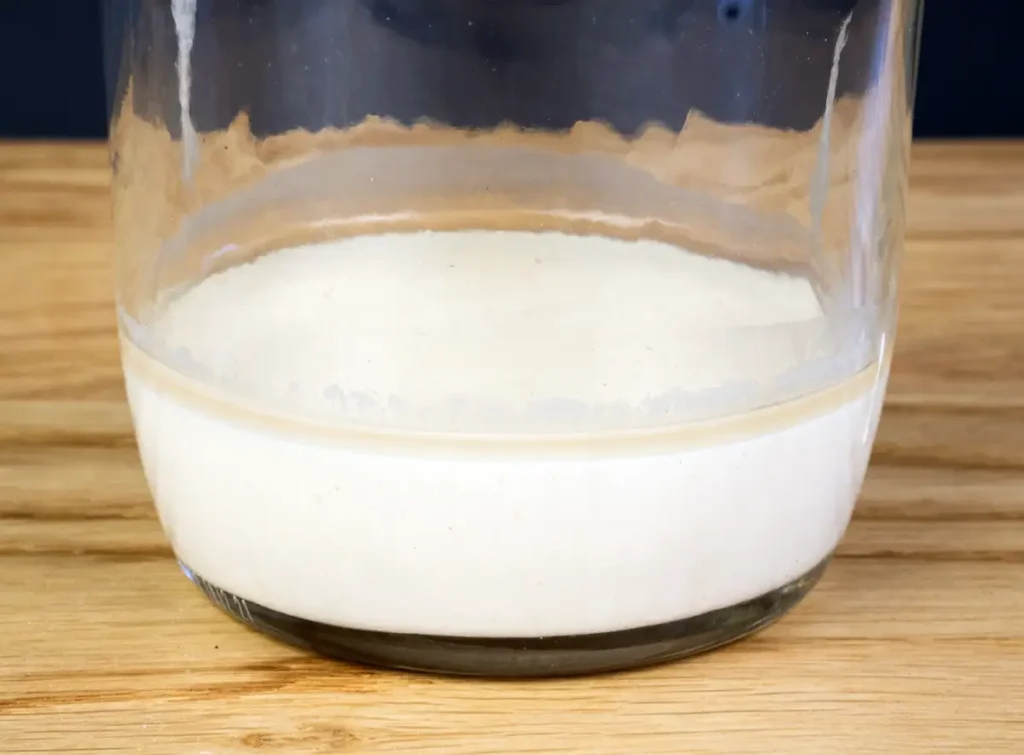
This is called hooch and is a sign that your starter is hungry. It is made of the byproducts of fermentation and is only produced when a starter has been left unfed for a significant amount of time.
How to fix it: Stir the hooch back in to the starter, then follow the feeding and discarding instructions above, under Why does my starter smell like alcohol or acetone/nail polish remover?
Why is there a weird wrinkly layer on top of my starter?
This is likely kahm yeast, which is a harmless but foul-tasting yeast that can sometimes appear on top of a severely neglected starter.
How to fix it: Scrape off the top affected layer, and scoop out a tiny bit of normal-looking starter. Transfer that to a clean jar and give it a nice big feeding. If that doesn’t work and the kahm yeast returns, you may need to throw it out. If you have any discard in the fridge you can feed that, and it will turn into an active starter. Or you can rehydrate a backup starter, or make a new starter from scratch.
My starter dried out, is it dead?
Your starter is fine. Actually, drying out a starter is the best way to preserve it as a backup!

How to fix it: Read this post for instructions on how to revive a dehydrated starter. To prevent this from happening again, use the lid your jar came with but just screw it on loosely (or rest it on top without its rubber gasket if it’s that kind of jar).
Can I bake with my starter if it has fallen and it’s past its peak?
Yes, the starter is still full of wild yeasts and good bacteria ready to leaven bread. If your starter is very past its peak (if it’s been in the fridge for a week or more since it was last fed, for example) it will take noticeably longer for your dough to rise than if you were using active bubbly starter at its peak. A starter that has fallen a little bit and is just a few hours past its peak will work just about as well as one that’s at its peak. If your starter is very loose and liquid, or has a layer of hooch on top it might still work fine. Since the starter isn’t as strong or active as one that’s at peak, you can expect that the bulk fermentation phase of your recipe will take significantly longer than usual.
How to fix it: You can try baking with it as is and expect a longer bulk fermentation, or discard and give it a high-ratio feed and give it time to peak again before you bake with it. That said, a starter that is at or close to its peak is ideal to bake with and will give you the most predictable results.
I accidentally preheated my oven or microwave with my starter in it, did I kill it?
Maybe, if it’s been in the oven for a long time or if it’s in a container that is not oven- or heat-safe, such as plastic. If your starter is kept in a plastic container, I recommend throwing it out to be on the safe side—you can’t be sure that no harmful chemicals haven’t leached into it, even if the container still looks OK. If you keep it in a glass mason jar or another container that can safely withstand high heat, your starter might be salvageable.
How to fix it: Scrape off any starter that looks toasty or baked. Transfer some starter to a new jar, especially any that looks liquid or almost liquid. If the starter has dried out, add some water to the jar to soften and hydrate the starter. Feed it with water and flour as usual. Wait 24 hours and check if the starter shows any signs of activity. If it does, discard and feed again. Keep discarding, feeding, and waiting until your starter is back to normal. If it’s not showing any signs of activity after 48 hours it’s possible the starter has been killed and you’ll need to either make a new starter from scratch, or rehydrate your starter backup. Next time consider putting a sign on your oven so it doesn’t get turned on by accident, or try a different method for keeping your starter warm.
My glass jar broke with my starter in it, do I have to throw it out?
Unfortunately, yes. Glass can break into tiny shards and it would be difficult if not impossible to be certain that your starter has no glass left in it. It’s not worth the risk of accidentally ingesting a piece of glass.
How to fix it: If you have some discard in the fridge, you can feed that and get a starter going again. Or if you made a backup of your starter you can simply rehydrate it, and be back up and running in just a few days. Otherwise, you’ll need to make a new starter.
Patty says
I am restarting my starter by following your instructions and I’m wondering what “false rise” is?
Joanna Rankin says
Hi Patty!
All flour has lots of microorganisms in it already. There are some bacteria that flare up early on in the process, that metabolize the starches in the flour and let off CO2, but they don’t provide stable or reliable leavening for baking bread. It’s also possible there could still be pathogens in the starter, so for both reasons it’s not ready (and likely not safe) to bake with yet. Your starter will probably appear to go dormant for several days after the false rise, as the wild yeasts and good bacteria are getting established—it takes time for them to outcompete the other microorganisms and lower the pH (i.e. make it more acidic) so it’s difficult for others to take hold. Hope that makes sense!
I have a more detailed explanation of how the false rise works and where it fits into making a new starter in my post here.
Carol says
My sourdough starter seems to be active and has bubbles, but it has a very thick, “rubbery” texture. Is this a problem? If so, how do I fix it?
Joanna Rankin says
Did you use a scale to measure the water, flour, and starter? A thicker texture would generally be caused by having “too much” flour relative to water. But the reason that I put “too much” in quotations is that it’s not really a problem—it might slightly throw recipe proportions off because the starter won’t have as much water in it as the recipe might be expecting (because most sourdough recipes are written to use a 100% hydration starter), but that’s not really a problem. As long as you’re starter seems bubbly and active, that’s the important thing! The easiest way to “fix” it is to leave just a tiny bit of starter for the next feed, and weigh out the same weight each of water and flour to feed it with. That will bring it back to being a standard 100% hydration starter. hope this helps!
Viola says
I started starters in the past, but have failed. My granddaughter and I found you on YouTube however just started with all purpose flour we are now on day 5 and our starter has risen twice its size for two days. Not sure if this is false rise however it is smelling more sour then a bad smell it has a lot of bubbles and am not sure if I should just stay in phase 2 or go to 3. Thank you for any help or suggestions.
Joanna Rankin says
That’s great! Considering you’re only on Day 5 I would stay in Phase 2 for a few more days and see what happens (and sorry for my late reply—you’ve probably already moved on by now!). If you stay in Phase 2 and see that your starter is still consistently doubling in size, you could move on to Phase 3. Good luck!