Ingredients
Method
Mix & Knead the Dough
- Add 1 tbsp orange zest to 90 g sugar in a small bowl. Rub the zest into the sugar using your fingertips until it's very fragrant and the sugar resembles damp sand. Set aside.
- Add 120 g whole milk, 120 g starter, 3 large eggs, 525 g bread flour, 2 tsp fine sea salt, 1 tbsp anise seeds, and 1 ½ tsp orange blossom water to the bowl of a stand mixer. Attach the dough hook and mix on low speed until the dough comes together.
- Increase the mixer speed to medium-low and knead until the dough smooths out (3–5 minutes). Add 90 g unsalted butter one piece at a time, waiting until each piece disappears before adding another. Continue kneading until the dough is silky smooth and pulls away from the bowl (about 5–8 more minutes)
Bulk Ferment
- Roughly shape the dough into a ball and transfer to a lightly-greased bowl or container at least double the size of the dough. Cover with plastic wrap or a damp kitchen towel. Leave at room temperature (68–72˚F / 20–22˚C).
- During the first couple of hours, give the dough 3 or 4 sets of stretches and folds about 30 minutes apart. To do a stretch and fold, reach under the dough with a lightly-wet hand, pull it up until you start to feel some resistance, then fold it over itself. Rotate the bowl 90 degrees and repeat until you've gone all the way around the dough.
- Continue bulk fermenting at room temp until the dough is soft and airy, and has increased in volume by 75-100%. This should take around 6–8 hours but will vary depending on your room temperature (and the temperature of the milk you used) so watch the dough, not the clock.The dough should have a lightly rounded dome and slowly spring back when gently poked.
Divide & Shape
- Divide the dough into 10 equal portions (or shape 1 or 2 larger loaves, see note 2). I recommend using a scale to divide it evenly so that each roll finishes baking at the same time.
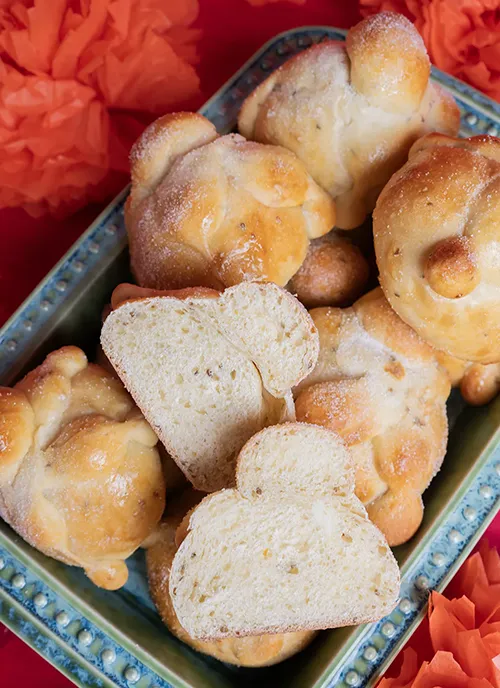
- Working with one portion at a time (and leaving the remaining dough portions covered so they don't dry out), cut off about one-third of the dough and set aside. Shape the larger (two-thirds) piece of dough into a round, smooth ball: fold the sides into the center, then cup your hand over the dough with the seam on the bottom and touching the counter, and roll around a few times. This tightens and smooths out the top. Pinch the seam closed if needed. Brush an X on top with the egg wash.
- Divide the smaller piece of dough into 3 pieces. Roll two of the pieces until ropes long enough to cover the larger dough ball. Then spread your fingers out and press down while rolling to create 4 lumps in the rope. Place the ropes over the X. Shape the final piece of dough into a small, smooth ball and press it down very firmly over the center where the two bones meet.
- Transfer the shaped roll to a lined baking sheet, and cover with greased plastic wrap or a plastic baking sheet cover. Repeat with the remaining dough portions. Leave them to proof at room temperature until puffy and soft, about 2 hours. They don't need to double in size.
Bake & Finish
- When the rolls look like they're nearly done proofing, begin preheating the oven to 350˚F (175˚F). Brush the rolls with egg wash, and bake for 25–30 minutes or until puffy and golden brown.
- While the loaves are baking, juice the orange you zested earlier. Weigh the orange juice, and weigh out an equal amount of sugar and add both to a saucepan. Whisk to combine, and simmer on medium-low heat until the sugar is dissolved. Transfer to a heatproof bowl and allow to cool slightly.
- As soon as the Pan de Muerto comes out of the oven, brush the syrup all over the tops, and sprinkle sugar on top if desired. Serve once the syrup has set.
- These are best enjoyed the day they're made, but will keep at room temp in a bread box or paper bag for a few days. If they go stale, they also make amazing French toast or bread pudding!
Video
Notes
- I recommend using active, bubbly starter. Enriched doughs like this one area already harder for a starter to leaven, so if possible use a starter at peak or shortly after. A starving starter that smells of alcohol or acetone (or with a layer of hooch on top) will not only have a hard time leavening this dough, it could add strong flavours you may not like in this bread.
- You can make one or two larger Pan de Muerto loaves, or divide the dough into whatever number of loaves you like. If you do, keep this rule of thumb in mind: larger loaves take a longer time to proof and bake, and smaller loaves will proof and bake faster.
- If making large Pan de Muerto, there's no need to transfer the sugar to a bowl at all. Just sprinkle sugar over the loaf.