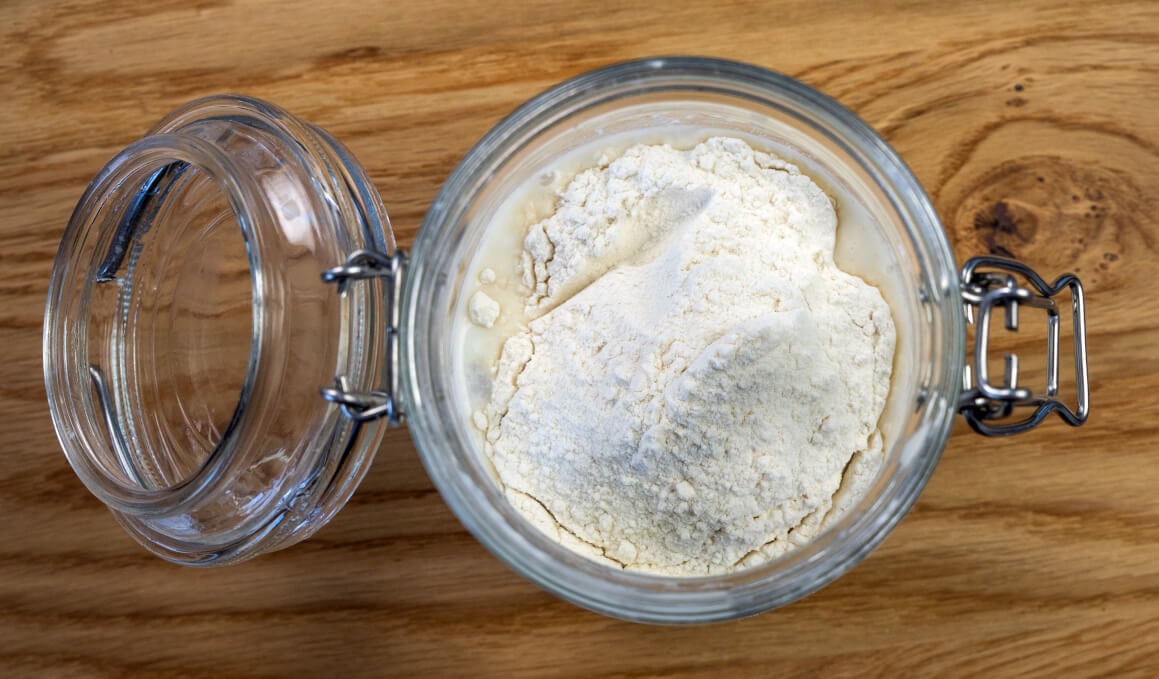
Ingredients
Equipment
Method
- Measure out 10 grams sourdough starter or discard into a clean jar, or if you know the weight of the jar the starter is in when empty, just pour out enough starter until about 10 grams remain. If you have a hard time measuring 10 grams on your scale, you can simply put about a plum-sized blob of starter on your spatula and place that in a clean jar. It's not super important to have an exact weight for your starter, so don't sweat it!
- Add 100 grams water and 100 grams flour, and stir with a rubber spatula until combined and no dry bits of flour remain.
- Scrape down the sides of the jar, and lightly screw on the lid to allow gases to escape. You may want to mark the level of the starter with a rubber band so you can tell how much it rose.
- Leave at room temperature if you will be baking in the next day or two. If you usually bake only once per week or less, leave the starter at room temperature for a few hours and then store in the fridge.
Notes
You can use just about any flour to feed your starter. I usually use all-purpose unbleached flour because it's readily available and inexpensive. Bread flour, rye, or whole wheat flour also work great! You don't need to use organic flour unless you want to—I usually use a cheap generic store brand flour with great success.
This recipe feeds your starter at a 1:10:10 feeding ratio (more about feeding ratios in the post above). I find this works well if I'm feeding once a day and leaving the starter at room temperature, as it reaches peak in about 24 hours. It also works well for me when I store my starter in the fridge, after giving it a few hours at room temperature first. Based on your specific needs you may want to feed at a higher or lower feeding ratio—read more about feeding ratios in the post above!