
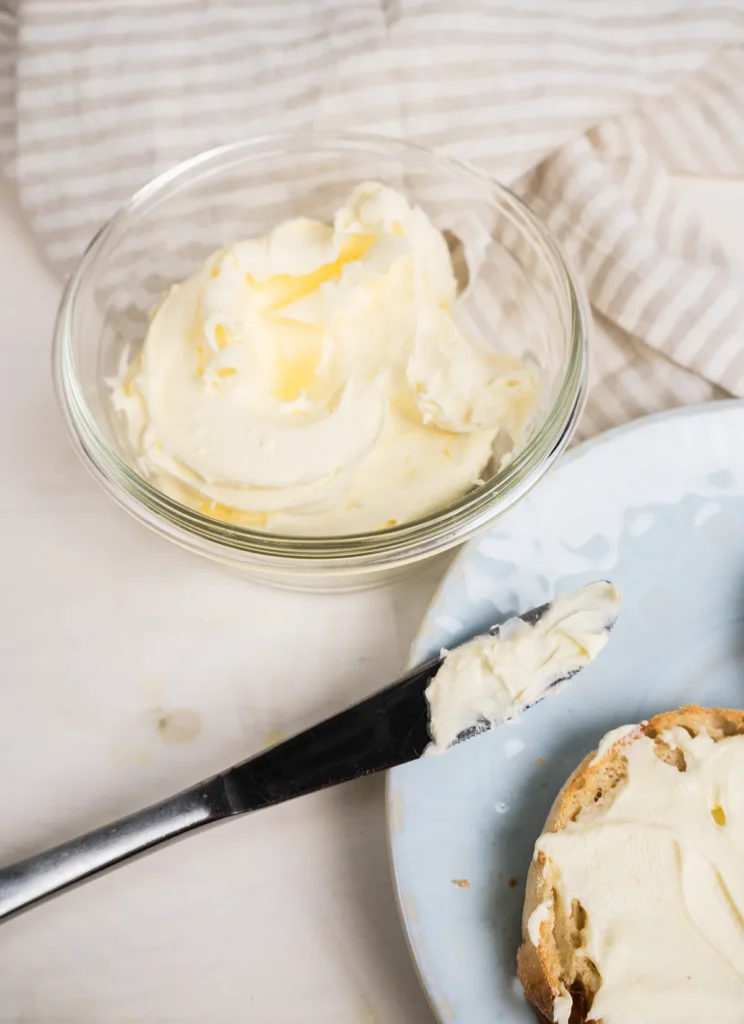
Why pay a small fortune for mascarpone, when homemade is cheaper, fresher, and even better than store-bought? This easy 2-ingredient recipe will give you creamy dreamy mascarpone that’s perfect for tiramisu, cannoli, or slathered on a bagel.
Some links in this post may be affiliate links. Read my disclosure policy.
Prefer to Watch Instead of Read?
What Is Mascarpone Cheese and Why Make it Yourself?
Mascarpone is a creamy, smooth, and rich Italian cream cheese. It’s often used in desserts like tiramisu, cheesecake, and cannoli, but also sings in savoury dishes like pasta sauces and dips. It’s mildly sweet, intensely creamy, and gloriously rich. Store-bought mascarpone is often full of stabilizers, thickeners, flavours, and preservatives, and is often quite expensive.
Mascarpone is surprisingly easy to make at home yourself. It only takes 2 ingredients, a little bit of heating at the stove, and chilling overnight to make mascarpone cheese that’s every bit as thick and creamy as the store-bought stuff, without the additives or inflated price.
How does Homemade Mascarpone Compare to Store-Bought?
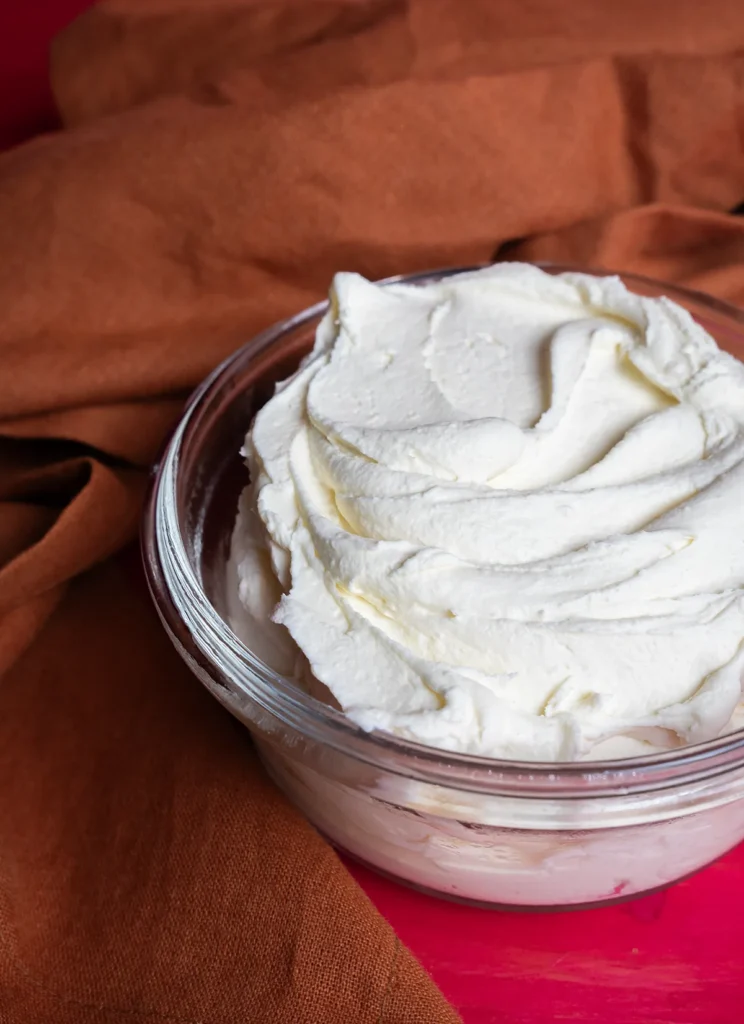
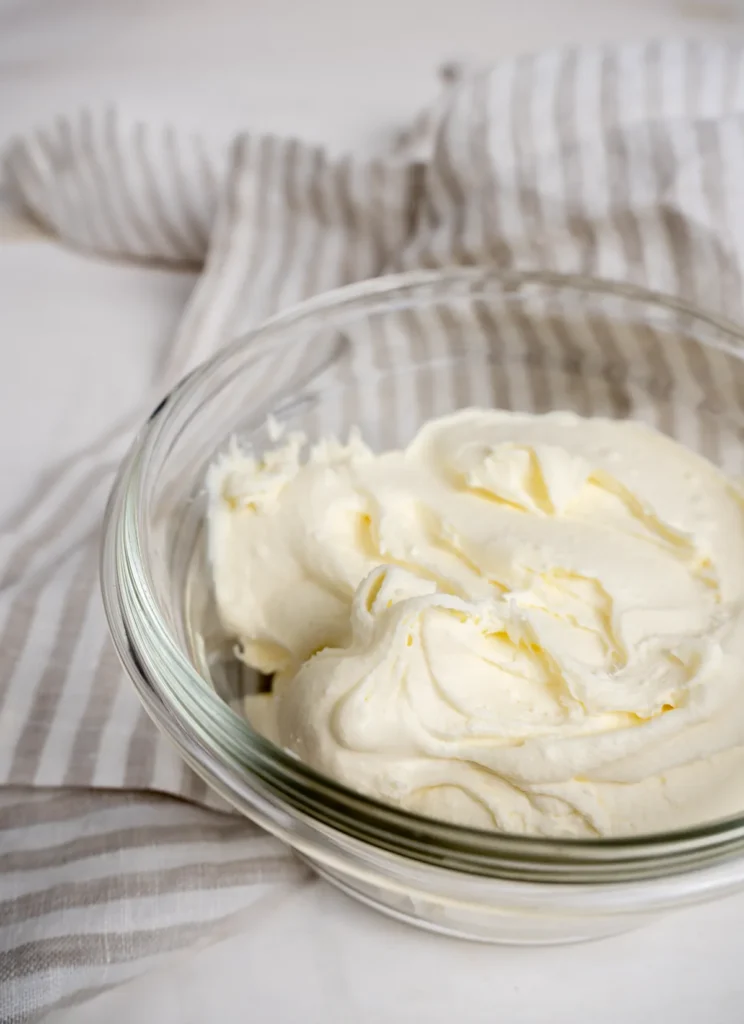
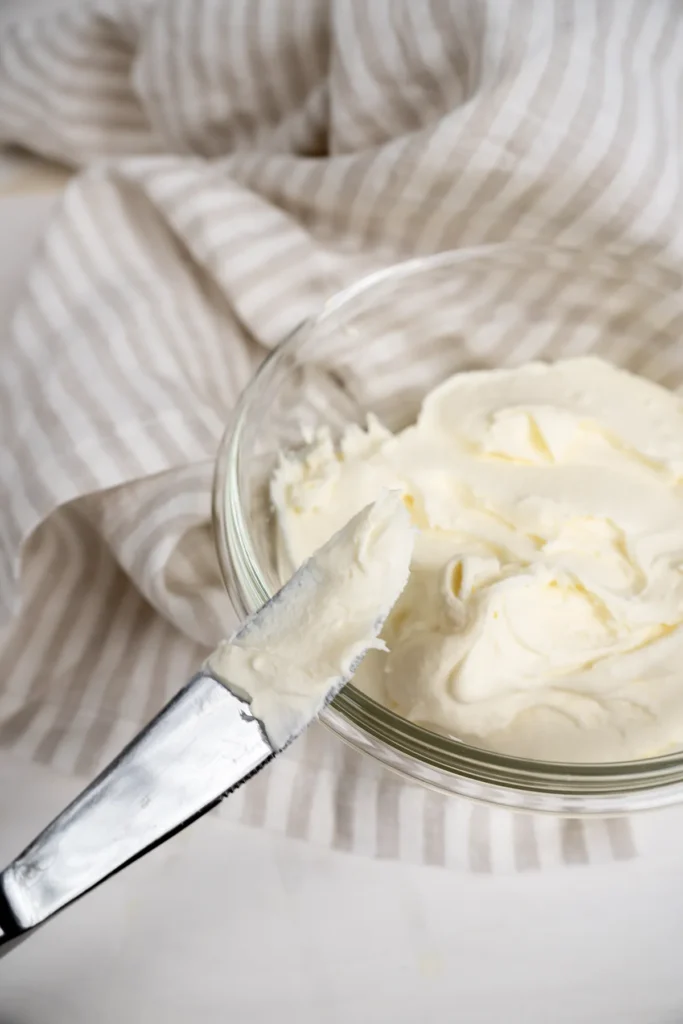
Homemade mascarpone is fresher, made with only heavy (whipping) cream and lemon juice. Because store-bought mascarpone contains stabilizers, thickeners, and preservatives, it also appears smoother than homemade mascarpone cheese and will last longer in the fridge. Homemade mascarpone may appear slightly grainier than store-bought when it’s done straining, but will work exactly the same in as store-bought in recipes. Based on my local grocery prices at the time of writing this post, it also only costs about half the price of store-bought mascarpone cheese.
Ingredients You Need
- Heavy cream, also known as whipping cream, double cream, or full cream, has enough fat to give mascarpone cheese the body and richness it needs. Look for cream with at least 35% fat.
- Lemon juice is acidic, which causes the proteins in the cream to coagulate, turning it into cheese. use fresh-squeezed lemon juice for the best flavour.
Equipment You Need
- A coffee filter or a few layers of good-quality paper towel, to hold onto the thickened cream while letting the whey drip through. Don’t use cheesecloth. It’s weave is too loose, and it will let the cream leak through (ask me how I know).
- A fine-mesh strainer to support the coffee filter or paper towel
- A bowl large enough to hold the strainer
- An instant-read thermometer to make sure you’re heating the cream to the right temperature.
The Science of Making Mascarpone
Making mascarpone is a simple and yet satisfying process! The cream is first heated to 185˚F (85˚C), which makes the proteins in the cream denature (or unfold), so they’re ready to bond together. Once the lemon juice or another acid is added, it makes the proteins clump together causing the heavy cream to thicken. A slow overnight chill in a fine-mesh strainer lined with a coffee filter or paper towel lets the whey drip out of the cream, leaving behind some gloriously-creamy mascarpone cheese!
Pro Tips for Creamy Homemade Mascarpone Cheese
- Use the right cream. Avoid ultra-pasteurized (UHT) cream, because the high heat used to process it alters the proteins and it may not thicken properly. Use regular pasteurized dairy cream with at least 35% fat content.
- Use a thermometer to accurately measure whether the cream has been heated to 185˚F (85˚F). If the cream gets much hotter than this (or doesn’t reach this temperature), it may not thicken properly.
- Avoid using cheeesecloth to strain the cream. Its weave is too loose, and the cream will just flow right through it.
Uses for Homemade Mascarpone
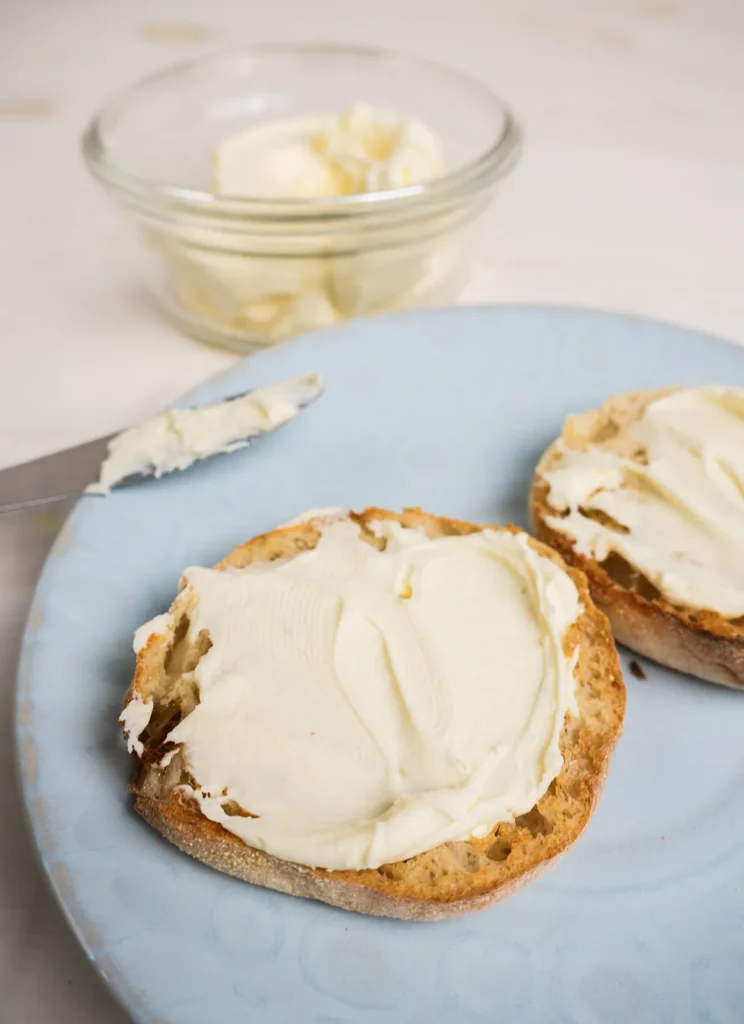
You can use homemade mascarpone anywhere you’d use cream cheese, or in any recipe calling for mascarpone or cream cheese. Some traditional uses of mascarpone cheese are in desserts like tiramisu and cannoli. You can also use it to make amazing cream cheese frosting or cheesecake. While mascarpone is often used in sweet applications, you can also use it to make decadent savoury dishes. Some possibilities are creamy pasta sauce, dips, spreads, casseroles, or spread on toast or bagels.
Remember that if you’re substituting homemade mascarpone cheese for cream cheese in a recipe you may need to add more salt to compensate, as mascarpone cheese is unsalted.
Storing Homemade Mascarpone
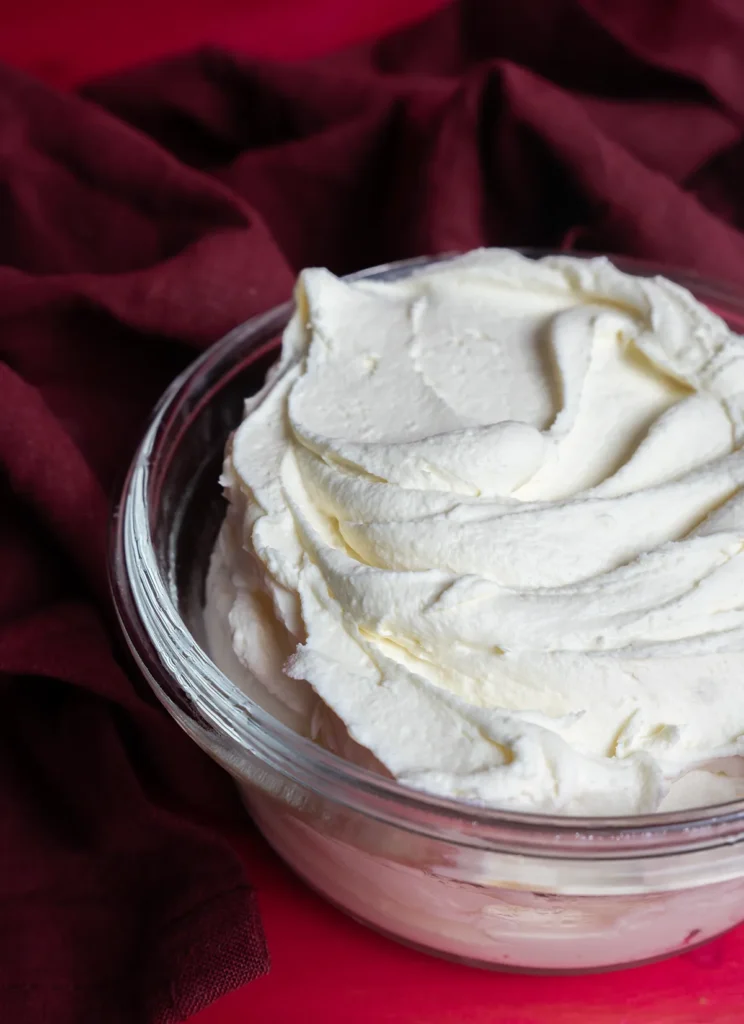
The best way to store homemade mascarpone should is in an airtight container in the fridge. It should be used within 3–5 days for the best flavour and texture. Keep it toward the back of the fridge where the temperature tends to stay the coldest. Always use a clean utensil to avoid introducing bacteria which can speed up spoilage.
If you’d like to make it ahead or save leftovers you can freeze mascarpone for up to 1 month, but it takes a little care. Freezing can cause the cheese to separate or become a little grainy once thawed. You can minimize those texture changes by freezing in a tightly-sealed container or freezer bag and pressing out as much air as possible. When you’re ready to use it, thaw it out slowly in the fridge overnight. Once thawed, you may need to gently stir or whisk it to bring it back together. Mascarpone that has been frozen is best used in baked dishes, sauces, or cooked desserts after freezing, rather than as a whipped topping, spread, or filling. The texture of thawed mascarpone won’t be quite as smooth as fresh.
FAQs
I don’t recommend it. Ultra-pasteurized cream and non-dairy alternatives won’t behave the same way as regular heavy cream when heated and acidified. The high heat used to treat UHT cream changes its proteins, so it may not thicken properly. Non-dairy creams have completely different fat and protein profiles, which can lead to an unusual texture or separation. For best results, stick with regular pasteurized heavy cream with at least 35% fat.
The mascarpone can taste acidic if too much lemon juice was added, or if another acid (such as vinegar) was used instead. It can end up grainy if the mixture was stirred too vigorously. That said, because homemade mascarpone doesn’t contain additives like stabilizers or thickeners, it will always appear slightly grainier than store-bought mascarpone. This won’t affect its performance, taste, or mouthfeel in recipes.
Whey is full of nutrients worth keeping. It contains protein, calcium, B vitamins, potassium, magnesium, and small amounts of lactose. While the amounts vary depending on your cream and process, it’s still a nutrient-dense liquid that adds a subtle richness and a bit of extra nutrition to baked goods, soups, or smoothies.
Homemade Mascarpone Cheese
Ingredients
Method
- Pour 1 litre heavy cream into a medium saucepan, and clip on a thermometer. Heat it gently on medium-low heat to 185˚F (85˚C) while stirring constantly.
- Once it reaches the temperature, take it off the heat and stir in 2 tablespoons lemon juice. Leave it to cool to room temperature.
- Place a fine-mesh sieve over a bowl, and line it with a coffee filter or 3 layers of good-quality paper towel. Do not use cheesecloth, or the cream could completely leak through it.
- Cover it with plastic wrap, and leave overnight in the fridge. The next day, you should have a strainer full of beautiful thick mascarpone cheese, and a bowl with some whey which you can save that to use in soup or smoothies.
- Transfer the mascarpone to an airtight container and refrigerate for 3–5 days.
Leave a Reply